Equivalent amounts of money – up to 50 rupees
key points :
💰 Equivalent Amounts of Money (Up to ₹50)
⭐ What does “Equivalent Amount” mean?
- Equivalent means same value.
- Different coins and notes can make the same amount of money.
👉 Example:
- ₹10 = ₹5 + ₹5
- Both are equal in value.
⭐ Common Coins and Notes
- Coins: ₹1, ₹2, ₹5, ₹10
- Notes: ₹10, ₹20, ₹50
⭐ Making the Same Amount in Different Ways
- ₹10 = ₹5 + ₹5
- ₹10 = ₹2 + ₹2 + ₹2 + ₹2 + ₹2
- ₹20 = ₹10 + ₹10
- ₹20 = ₹5 + ₹5 + ₹5 + ₹5
- ₹50 = ₹20 + ₹20 + ₹10
⭐ Counting Money Step by Step
- Count bigger notes first, then smaller coins.
- Add all values to find the total.
👉 Example:
₹20 + ₹10 + ₹10 = ₹40
⭐ Matching Equivalent Amounts
- Match different groups that have the same total.
- Helps children understand value, not just number of coins.
⭐ Real-Life Examples
Buying a toy for ₹20:
- You can pay with one ₹20 note, OR
- two ₹10 notes, OR
- four ₹5 coins
⭐ Practice Ideas
- Use real or paper coins to make amounts.
- Ask: “Show ₹30 in 2 different ways.”
- Play shop games to learn faster.
⭐ Important Tip
- More coins ≠ more money
- Always check the total value, not the number of coins.
Learn with an example
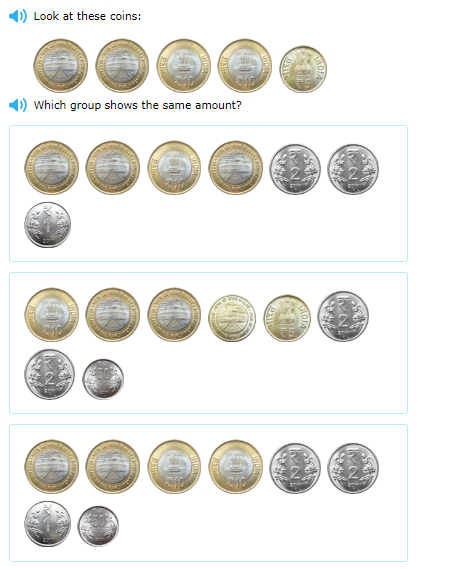
✈️ Look at these coins:
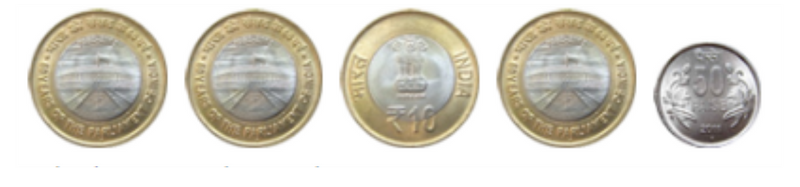
✈️ Which group shows the same amount?
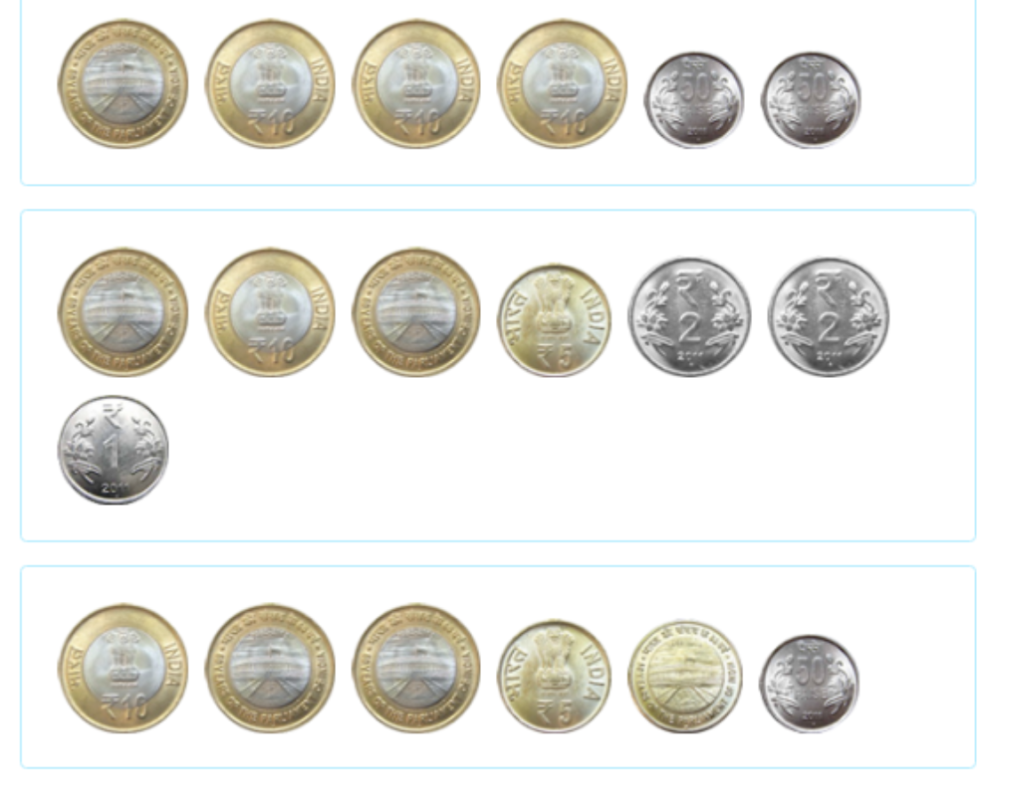
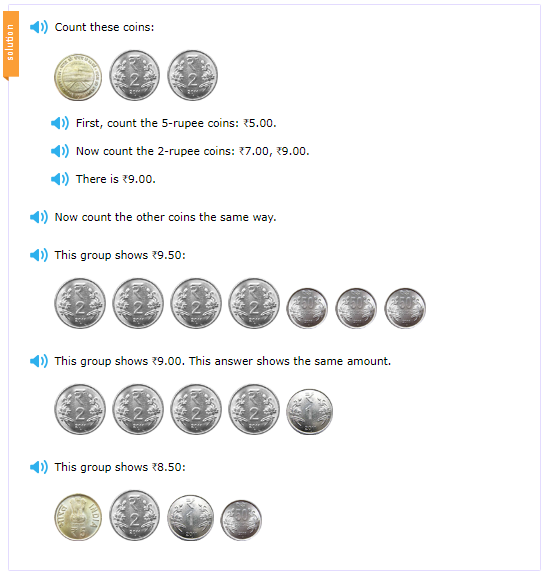
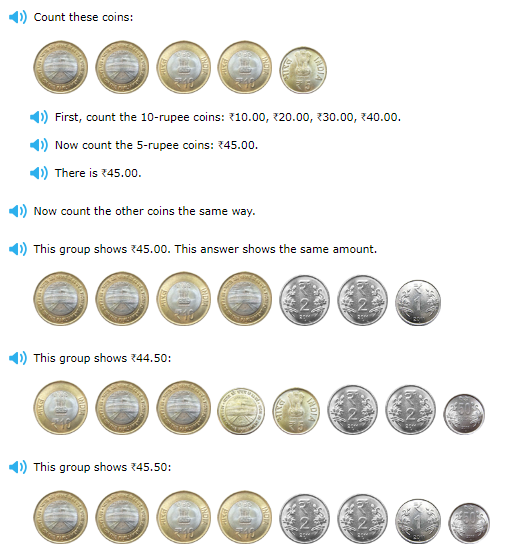
- Count these coins:
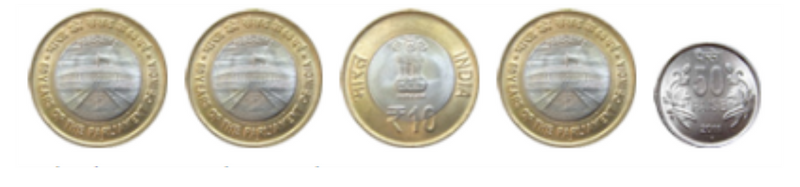
- First, count the 10-rupee coins: ₹10.00, ₹20.00, ₹30.00, ₹40.00.
- Now count the 50-paise coins: ₹40.50.
- There is ₹40.50.
- Now count the other coins the same way.
- This group shows ₹41.00:

- This group shows ₹40.00:

- This group shows ₹40.50. This answer shows the same amount.
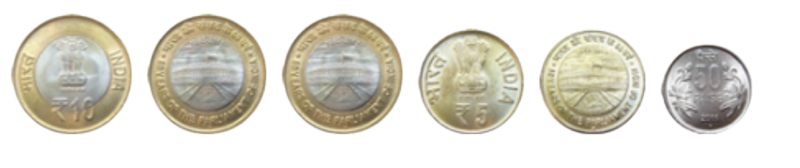

Let’s practice!🖊️